
Coral reefs and their importance

Coral reefs are one of the most diverse and important ecosystems present in the ocean and to us humans. It’s a habitat which provides shelter and food for millions of marine animals, especially like the turtles we care for here at AMC, and for humans like us. Let’s dive into just why coral reefs are important and why their destruction is essentially catastrophic.
What exactly are corals?

Surprising to many, corals are in fact not very stony plants, but are actually very tiny animals! Corals are made up of many little animals known as polyps, which are around 1-3 mm in size and feed on zooplankton or small fish. They usually feed at night and hunt with a barb like mechanisms known as ‘Cnidocytes’. This closely relates them to jellyfish and sea anemone, which also use cnidocytes to hunt and defend. It’s also why we get stung every time we touch them.
There are many different types of coral polyps, but they are usually typed into two groups depending on the type of skeletal structure they form. Hard coral rock-like and stony, and are most prevelant in coral reefs, being described as the main reef builders. Soft corals are more flimsy and squishy, and are usually found deeper down in the ocean.
Around the corals are algae known as zooxanthellae, which find shelter in coral polyps and also help with waste management as they are photosynthetic and take the waste carbon dioxide the polyp’s produce and convert it into oxygen, in turn providing it to the corals.
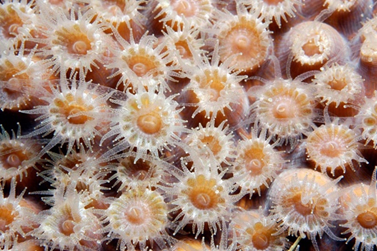
They are both dependant on each other to survive, and this hence is known as a symbiotic relationship! The zooxanthellae are also what give coral their vibrant color, due to pigments present in them that help absorb light for photosynthesis.
What do corals provide?
Although coral reefs only cover a small amount of the seafloor, they’re responsible for providing for about 25% of the ocean’s fish, as stated by the NOAA. It provides food, shelter and a place for fish to spawn, all at once. For example, Hawksbill turtle’s diets mainly consist of sea sponges, which are often found competing for space with corals in reefs.
Alongside that, reefs are an important barrier between the shorelines and the harsh ocean conditions such as waves and floods. It helps protect coastal towns and minimizes any damage that can be caused on the shoreline. Coral reefs are

also a key provider that forms beaches. A lot of the sand on beaches comes from broken down coral skeletons, either by natural events or by sea life like parrotfish. Parrotfish chew on algae present on the coral and in turn chew off bits off the harder skeleton, which results in their feces turning into sand.
Additionally, coral reefs are also important to industries like fishing and tourism. Their natural beauty and abundance of fish are a staple to fishermen and tourists alike and are heavily relied on.
Why do reefs get destroyed?
The main cause for most reef destruction is, unsurprisingly, human factors. Factors such as overfishing and pollution like trash that comes in from beaches or boats are a huge factor in reef destruction which leads to the death and removal of key species of fish that help in maintaining the reefs.
The pollution mixed with rising sea temperatures due to global warming also leads to a stress response known as bleaching, in which the coral polyps expel the zooxanthellae and turn white. Bleaching itself is a natural process to corals, and once the stressors are removed the zooxanthellae eventually return.

However, with the severity of the current stressors, bleaching is currently very large scale and threatens many reefs like the great barrier reef in Australia, survey research from AIMS showing that 40% out of 1080 reefs had more than half of their corals completely bleached in 2024.
Damage is also caused by those who have not been properly informed on what to avoid when swimming in reefs. There are many cases of people who are new to reefs often stepping on or kicking corals without realizing they damage they are doing to the habitat, simply due to the lack of awareness of how severe their actions are.
How can we help?
Even if you feel like doing little things would not have any effect, simple actions like managing your waste and picking up trash whenever you see some along the beach or in the water can lead a long way to protecting reefs. Educating yourself and spreading awareness to others about reefs is also an important factor, ensuring that more people would make a conscious effort to try and conserve the environment.

Laws can also be placed down to prevent harmful fishing practices such as commercial net fishing. In the Maldives net fishing has been banned to prevent damage to corals and other marine life such as turtles or dolphins, protecting fish stocks and focusing on sustainable fishing methods.
Without reefs, industries crash and a range of marine wildlife is put at risk due to how heavily depended on reefs they are. The death of coral reefs is a sign of how severe climate change and global warming is affecting our environment, and it is our duty to maintain and preserve nature as those who rely on and benefit from in in the first place.


Comments